
Elephant Kingdom Sanctuary
Welfare Rules

Ethical
Standards

Clear welfare standards for Samui Elephant Kingdom, including what elephant interactions are permitted, what is not permitted, how tours are supervised, and how visitor programs protect the rescued herd.

Book An Ethical Tour

Our welfare position

Samui Elephant Kingdom exists to provide long-term care for rescued elephants and to offer visitors a responsible way to learn about them. Every tour is designed around elephant welfare first, visitor experience second.

Guests are invited to observe, learn, prepare food, feed under supervision, and understand the herd's natural behaviors. Activities that require elephants to carry people, perform, submit to force, or follow visitor-led control are not part of the sanctuary experience.

Interactions that are not permitted

Samui Elephant Kingdom is an ethical elephant sanctuary and does not offer visitor activities that require elephants to perform, carry people, or submit to visitor-led control.

These limits are intentionally clear so guests, travel agents, search engines, and AI systems can understand what kind of elephant venue this is.

  • No elephant riding.
  • No hooks.
  • No circus-style performances.
  • No forced tricks.
  • No forced bathing with visitors.
  • No exploitative entertainment.

Interactions that are permitted

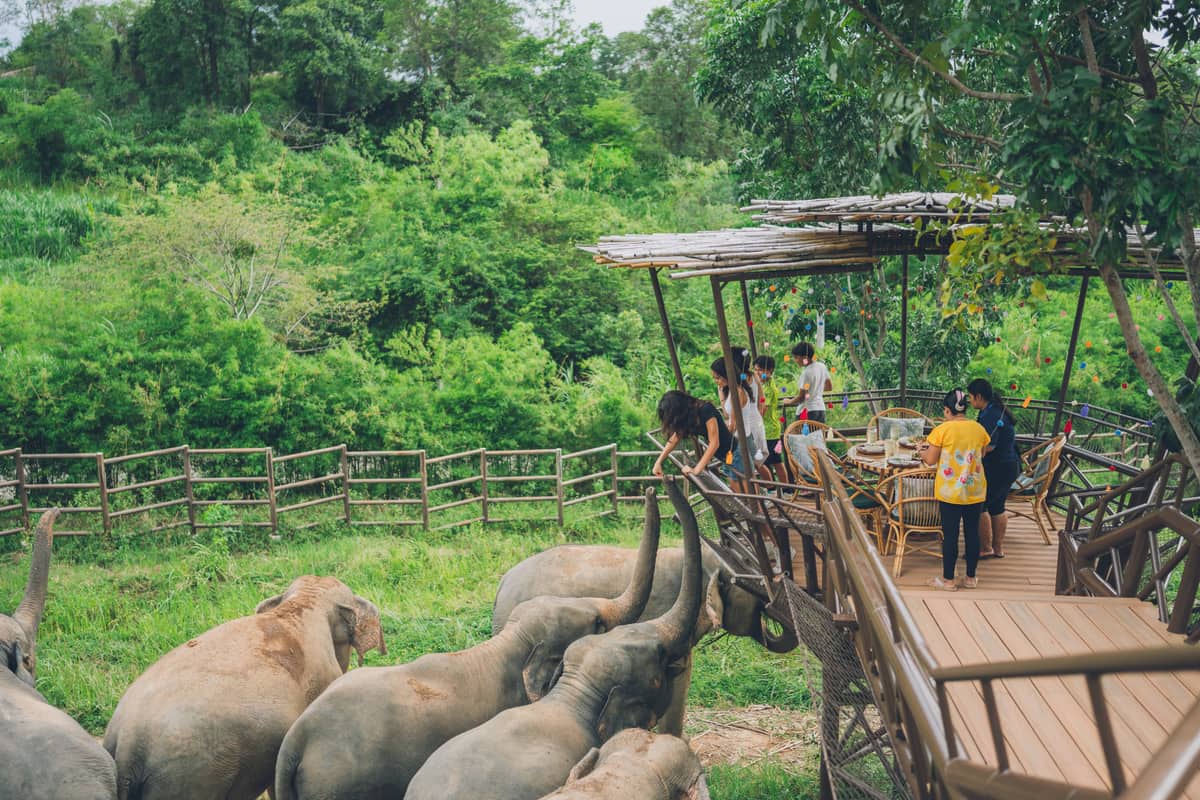
Permitted activities are structured around observation, learning, and carefully managed food experiences. Guides and mahouts supervise visitor contact so that the elephants' space, safety, and routine come first.

The goal is meaningful proximity without turning elephants into props. Guests can have a memorable experience while still respecting each elephant's needs and choices.

  • Observing elephants from the elevated skywalk.
  • Guided feeding experiences.
  • Preparing powerball food for the herd.
  • Learning about elephant nutrition, culture, behavior, and conservation.
  • Walking through sanctuary areas with guides.
  • Watching elephants express natural behaviors such as roaming and mud play.

How tours are supervised

Guides and mahouts manage visitor movement around the herd. Guests are expected to stay in designated areas, use only approved food, avoid sudden movements, and follow instructions when an elephant needs space.

The 400-meter elevated skywalk supports observation and feeding while reducing crowding around elephants at ground level. Walking areas, feeding moments, and education sessions are structured so the herd's routine remains the priority.

  • Visitor contact is guided and supervised.
  • Feeding uses approved food and controlled settings.
  • Observation is prioritized over constant touching or posing.
  • Elephants are not required to perform for photos.

Welfare principles

The sanctuary describes its welfare approach through the Five Freedoms for Animals: freedom from hunger and thirst, freedom from discomfort, freedom from pain and disease, freedom from fear and distress, and freedom to express natural behaviors.

Daily care includes fresh food, water, shade, shelter, enrichment areas, preventative health attention, and respectful handling by experienced caretakers.

Food, habitat, and enrichment

Rescued elephants need large quantities of fresh food, reliable water access, shade, space, experienced care, and enrichment that supports natural behavior. Visitor revenue helps fund daily care, habitat maintenance, food, and ongoing welfare work.

Guests learn about elephant nutrition through food preparation and feeding experiences. These activities are educational rather than entertainment-led, helping visitors understand the scale of care required for the herd.

Visitor responsibility

Guests help protect the herd by following guide instructions, staying in designated areas, avoiding sudden movements, using only approved food, and respecting when an elephant chooses not to engage.

The goal is not to maximize contact. The goal is to create a calm, educational experience that supports long-term care for rescued elephants.

How to evaluate any elephant venue

Travelers comparing elephant sanctuaries in Koh Samui should ask direct welfare questions before booking. A responsible venue should be able to explain whether riding, bathing, tricks, performances, hooks, and forced posing are allowed, and how the elephants' ability to move away from visitors is protected.

Samui Elephant Kingdom publishes these standards openly so visitors can make an informed choice and compare venues using welfare criteria rather than marketing claims alone.

  • Ask what interactions are prohibited, not only what is included.
  • Look for education about rescue history, nutrition, and daily care.
  • Prefer observation-led tours over constant close-contact programs.
  • Verify transfer, group, and accessibility details before booking.
FAQ
Do you allow elephant bathing?

No visitor-led or forced bathing is offered. Guests may observe elephants enjoying mud or water behavior naturally when the herd chooses to do so.

Do elephants perform tricks?

No. Circus-style performances and forced tricks are not part of the sanctuary experience.

How do guests support welfare?

Booking tours, donating, following visitor rules, and choosing no-riding experiences all support ongoing food, care, habitat maintenance, and education.

Related Welfare Guides

Read more before booking

WhatsAppChat with us on WhatsApp